
Case study: AI-enabled performance support for new international hires
Cultural Compass
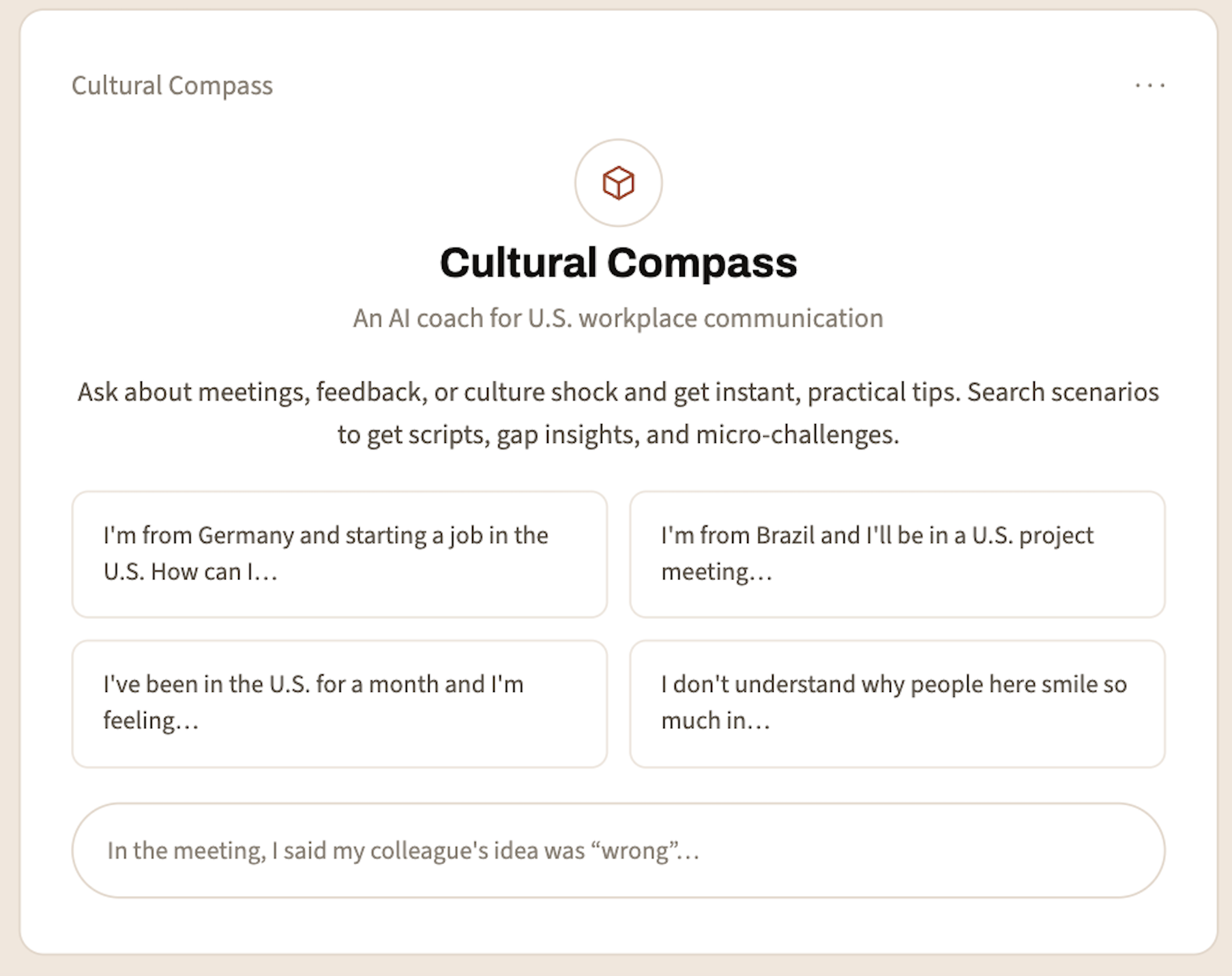
An AI coaching tool that gives new international hires the right words for the next two minutes of their real workday.
Multinational manufacturer, relocation program
Client
Executives and senior technical leaders moving to the U.S.
Audience
Training Specialist, Instructional Designer
My Role
Claude, ChatGPT (custom GPT), Excel
Tools
AI coach · Scenario scripts · Practice challenges
Tools
The project at a glance
1. Performance goal
New hires push back, give feedback and ask for decisions clearly in U.S. meetings.
2. Gap
They understood the cultural concepts but lacked the words in the moment.
3. Intervention
Situation-specific scripts, delivered in Slack or Teams right before the meeting.
4. Measure
Behavior transfer: did they use a script in a real workplace conversation?
The design decision: scripts, not modules
In the first 90 days, learners don’t need a textbook. They need a few lines they can say out loud. So I stopped designing long modules and started designing scripts: short, situation-specific language that sharpens the person’s own voice instead of replacing it.
The Challenge
Relocation specialists from Germany, Turkey and Brazil had just started working for a major automotive brand in the U.S. Cross-cultural training had taught them the concepts.
What it couldn’t give them was language: what to say when a meeting starts in ten minutes and they need to push back, give feedback or ask for a decision without sounding abrupt or overexplaining.
The gap wasn’t knowledge. It was performance in the moment.
Cultural Compass
Hands over lines to say in a specific meeting
Short scripts requested when needed
Arrives in slack or teams
Shapes the learner’s own voice
Typical onboarding training
Explains cultural concepts
Long modules, completed once
Lives in an LMS tab
How a script gets made
Four parts work as one system. The loop at the end is what keeps the library improving after launch.
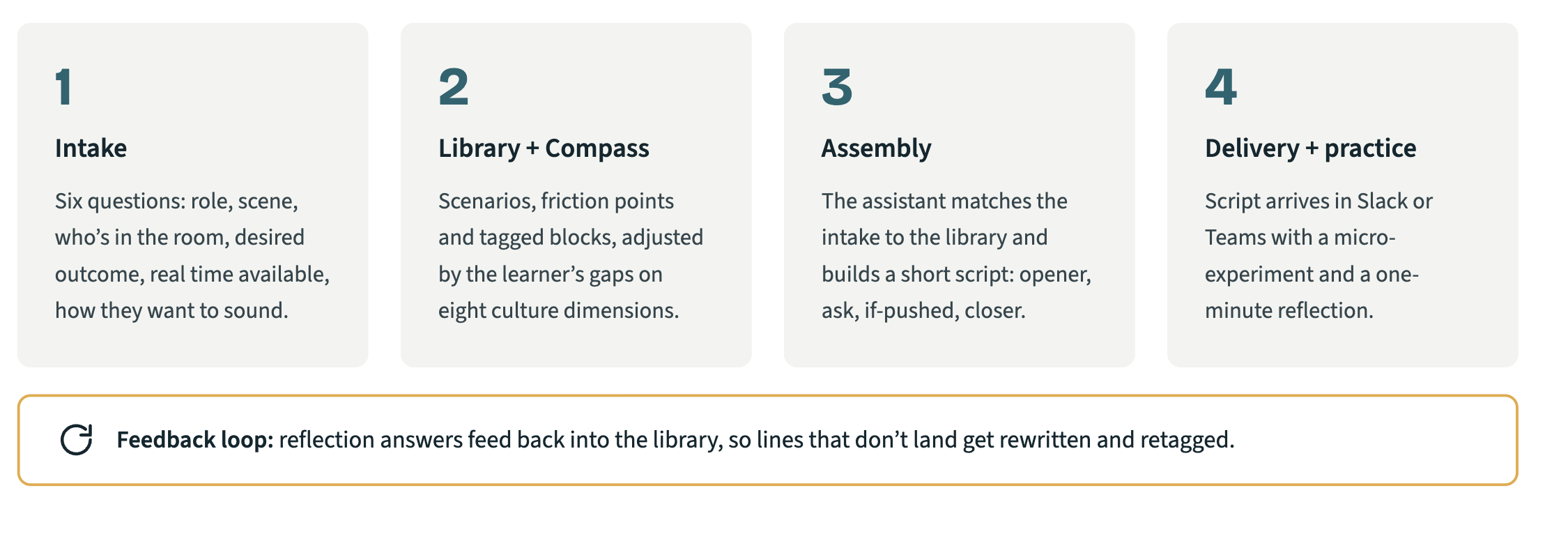
A no-code system, so every fix could ship in minutes instead of waiting on a development cycle.
The build
The intake
Six quick questions: role, the scene they’re walking into, who’s in the room, the outcome they want (decision, information or relationship), how much time they truly have, and how they want to sound.
Three tabs. Scenarios are the meetings everyone recognizes. Friction points are the habits that trip people up. Blocks are small, reusable lines tagged by type and tone.
The library
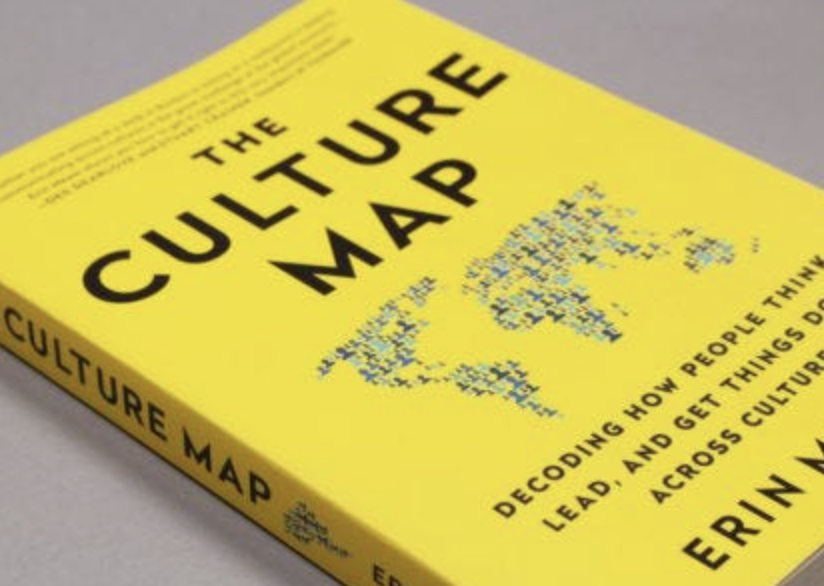
Inspired by Erin Meyer’s The Culture Map: eight dimensions on a 1–7 scale. When a gap spikes, on directness or feedback style for example, the script adjusts. It works as a compass, not a verdict.
The Compass
The assembly
The assistant pattern-matches the intake to the library. A status update for executives pulls brevity, decision-framing and evidence. Peer feedback pulls kind directness and a quick why.
Testing and results
Before the pilot, I built a scenario test set around the three home cultures and reviewed outputs for accuracy, tone and stereotyping. Then I piloted the tool with 50 relocation specialists.
I measured behavior transfer, not satisfaction.
Output quality review: accuracy, tone, stereotypes
Behavior transfer: script used in a real conversation.
Measured in the pilot
35 of 50
pilot participants (70%) used a Compass script in a real workplace conversation.
Edit distance, as a proxy for confidence
Time to first confident meeting
Decision velocity
Manager feedback at 30, 60 and 90 days
Scripts generated vs. scripts used
Signals the tool tracks
A tool that keeps learning
What did you cut that no one missed?
What made the room lean in?
Every script ships with a micro-experiment, such as leading with the outcome in two meetings this week or keeping the opener under 35 seconds, and a one-minute reflection:
Those answers feed the library. Privacy stays strict: minimal context, no raw transcripts. The assistant proposes; the learner decides.
“It didn’t make me sound American. It made me sound like myself, but in a way people here hear.”
Pilot participant, first month in the U.S.
What I learned
Personalization isn’t about changing someone’s voice. It’s about giving that voice a shape that carries. The Culture Map shows which levers matter; the script makes those levers usable in the room.
I now spend less time explaining how to communicate and more time handing people words that work.